
Letter from the curator #5: If ruins could talk (development)
Dear readers,
Have you ever heard the term “Mosquito Halls”? In Taiwan, empty public facilities filled with mosquitoes but devoid of people are often referred to as “Mosquito Halls” (蚊子館). Taiwanese artist Yao Jui-Chung has spent decades documenting abandoned sites across Taiwan through photography. His project Roaming Around the Ruins is a black-and-white photo series spanning 1991 to 2011, capturing military installations, industrial sites, religious spaces, and abandoned buildings throughout the country.
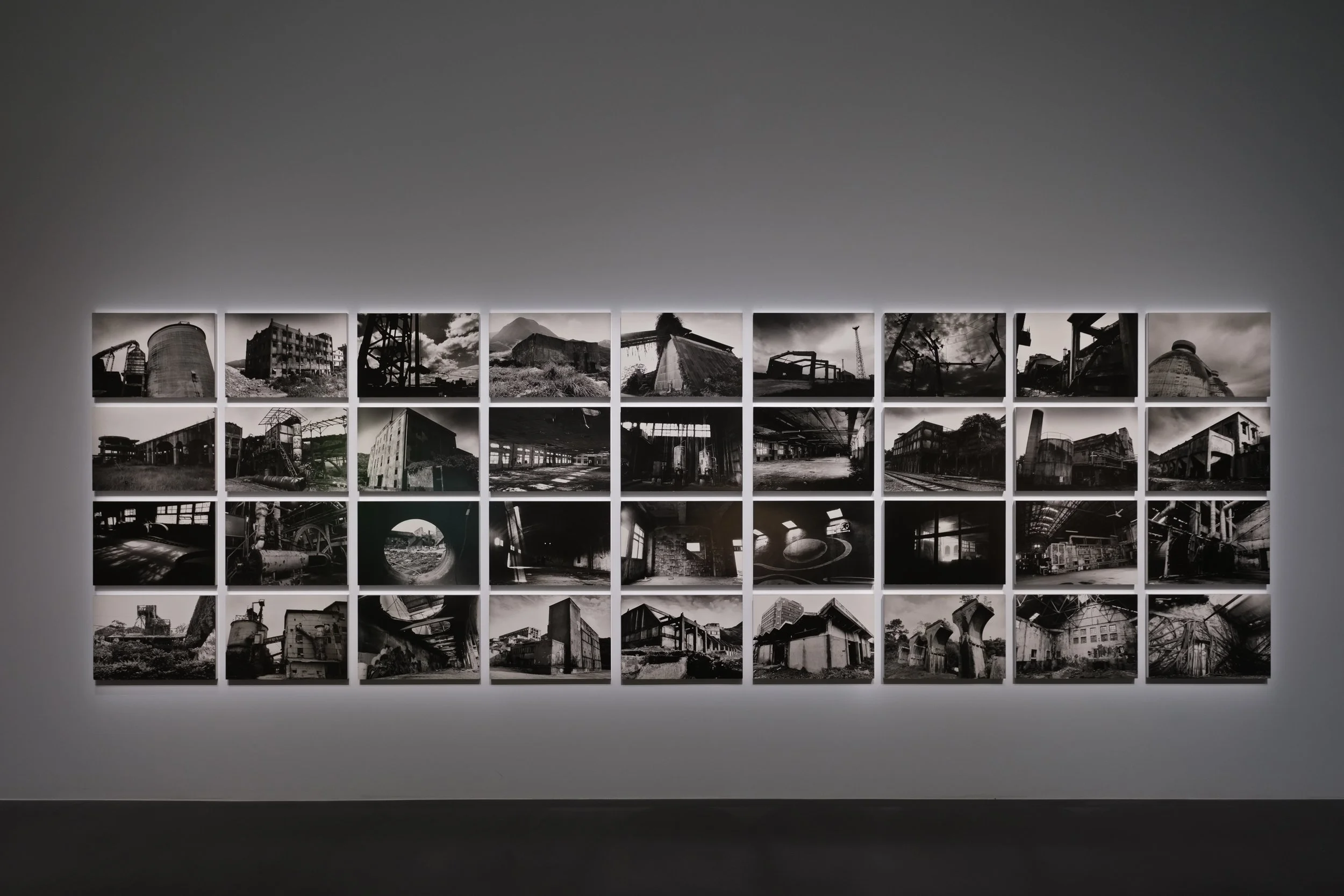
Installation view, Yao Jui-Chung, Roaming around the Ruins, 1990–2005, B&W Epson Digital Print Photos on black aluminum frame with acid-free paper, dimension variable. Image courtesy of the artist.
The ruins in his photographs are quiet. Time, having come to a halt, even appears beautiful. But if you linger on these images, questions begin to emerge. Why were these buildings abandoned? Were they ever truly needed? Or was it the act of building that mattered?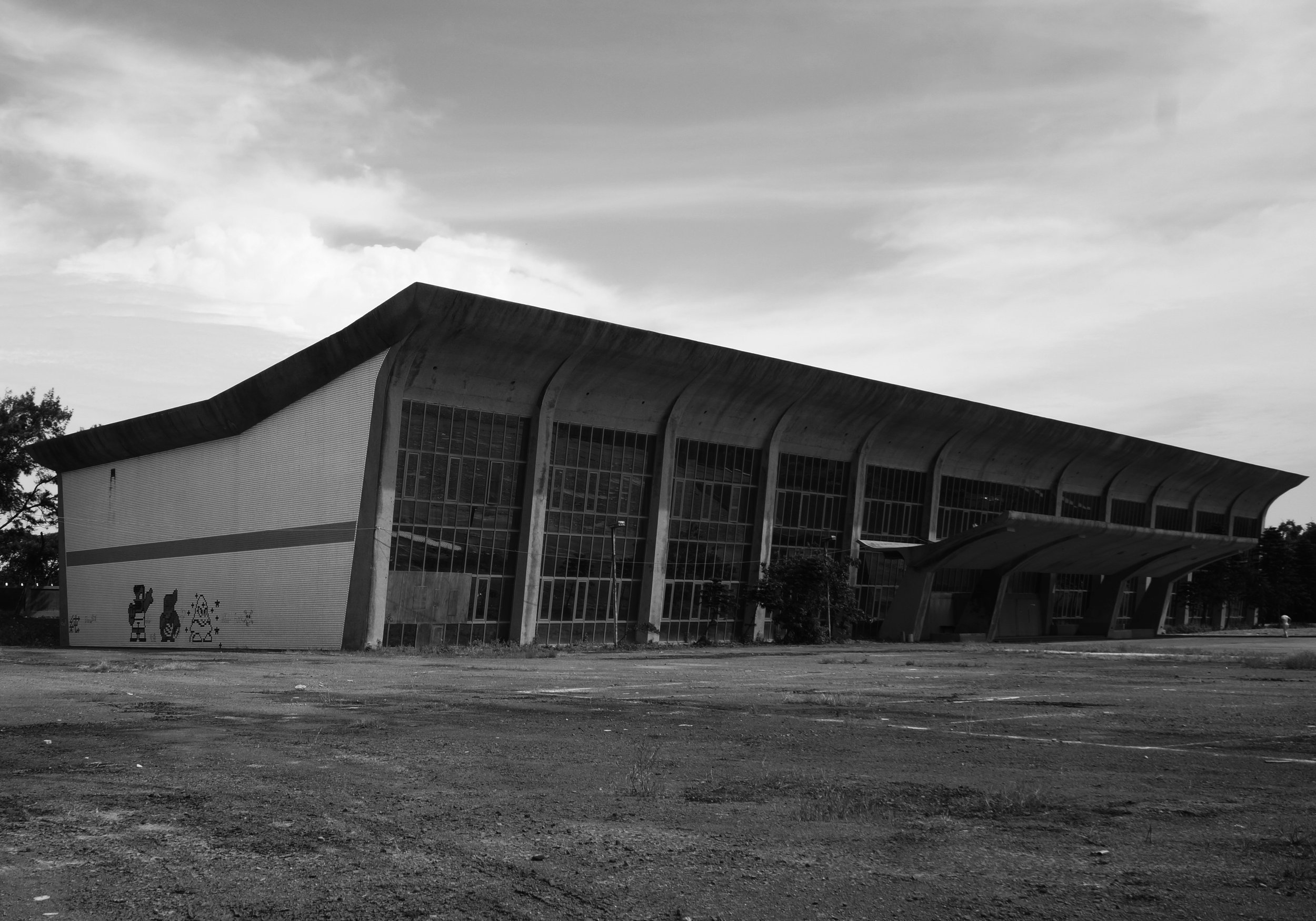
Yao Jui-Chung, Roaming around the Ruins. Image courtesy of the artist.
Taiwan was colonized by Japan in the late 19th century, and after World War II, the Nationalist (Kuomintang) government from mainland China imposed a long period of martial law. Within the geopolitical order of the Cold War, this authoritarian structure became intertwined with state-led economic development. Through industrialization and export-oriented growth, Taiwan built the economic foundation it stands on today. The infrastructure and large-scale projects built during this period were not merely economic facilities. They were part of a broader landscape of development, shaped by the convergence of U.S. military and economic support, anti-communist ideology, and state-driven planning.
New buildings serve as the easiest proof that “we are developing”. But whether people will actually use those spaces is often a secondary concern. In capitalist societies, construction is not simply a response to need. At times, construction itself becomes a way of driving the economy. Once a project begins, budgets circulate, contracts are signed, jobs emerge, and politicians can point to visible achievements.
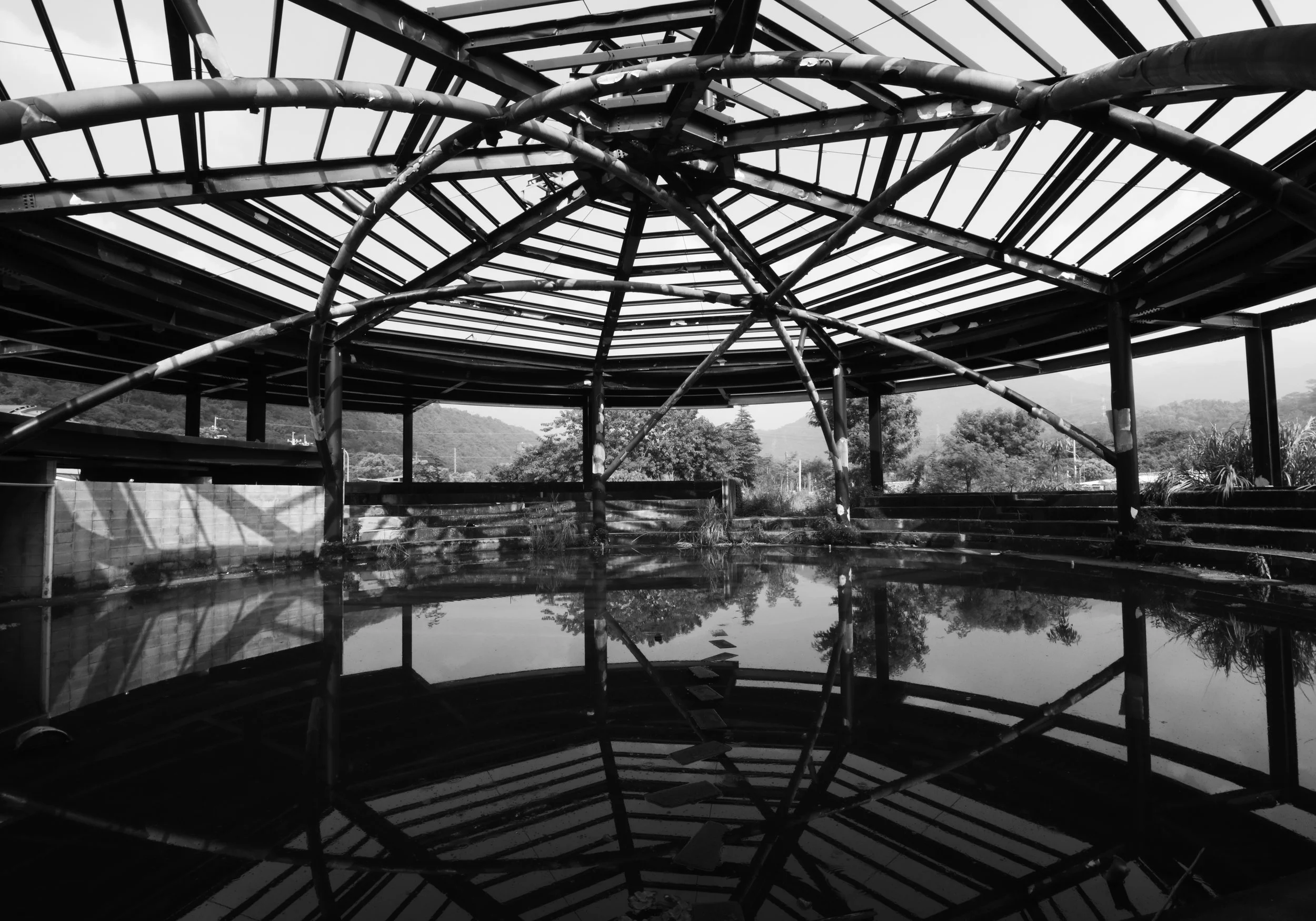
Yao Jui-Chung, Roaming around the Ruins,1990–2005, B&W Epson Digital Print Photos on black aluminum frame with acid-free paper. Image courtesy of the artist.
Taiwan’s Mosquito Halls can be understood within this framework. Many were built under persuasive justifications: regional development, domestic expansion, and the reduction of urban-rural disparities. Yet usage rates were miscalculated, plans and designs failed to align with reality, and operational budgets were insufficient. In the end, the buildings were completed, but life never moved in. This is not a problem unique to Taiwan. We see similar patterns around the world: oversized stadiums, unused airports, empty cultural centers built in the name of regional development, and expanding military infrastructure justified by security concerns.
The ruins in these black-and-white photographs may appear to be traces of the past, but they are in fact closer to questions directed at the present. They reveal how easily what we call “development” can become little more than empty buildings. The problem with Mosquito Halls is not the mosquitoes. The real issue is that these buildings were once called “the future”. And perhaps the world we live in is still building far too many of these futures.
This line of questioning ultimately intersects with the problem of war. Within the dynamics of neoliberalism and neo-imperial relations, war is framed in the language of borders, security, and threat, while simultaneously mobilizing vast flows of budgets, contracts, weapons, construction, destruction, and reconstruction. Certain regions are kept in conditions of conflict and instability, where military bases and infrastructure are repeatedly built, destroyed, and rebuilt. In this process, enormous amounts of capital circulate, and post-destruction reconstruction appears not merely as recovery, but as another phase within ongoing accumulation. Some spaces are not designed for sustained use from the outset, instead, they function as transit zones through which power passes.
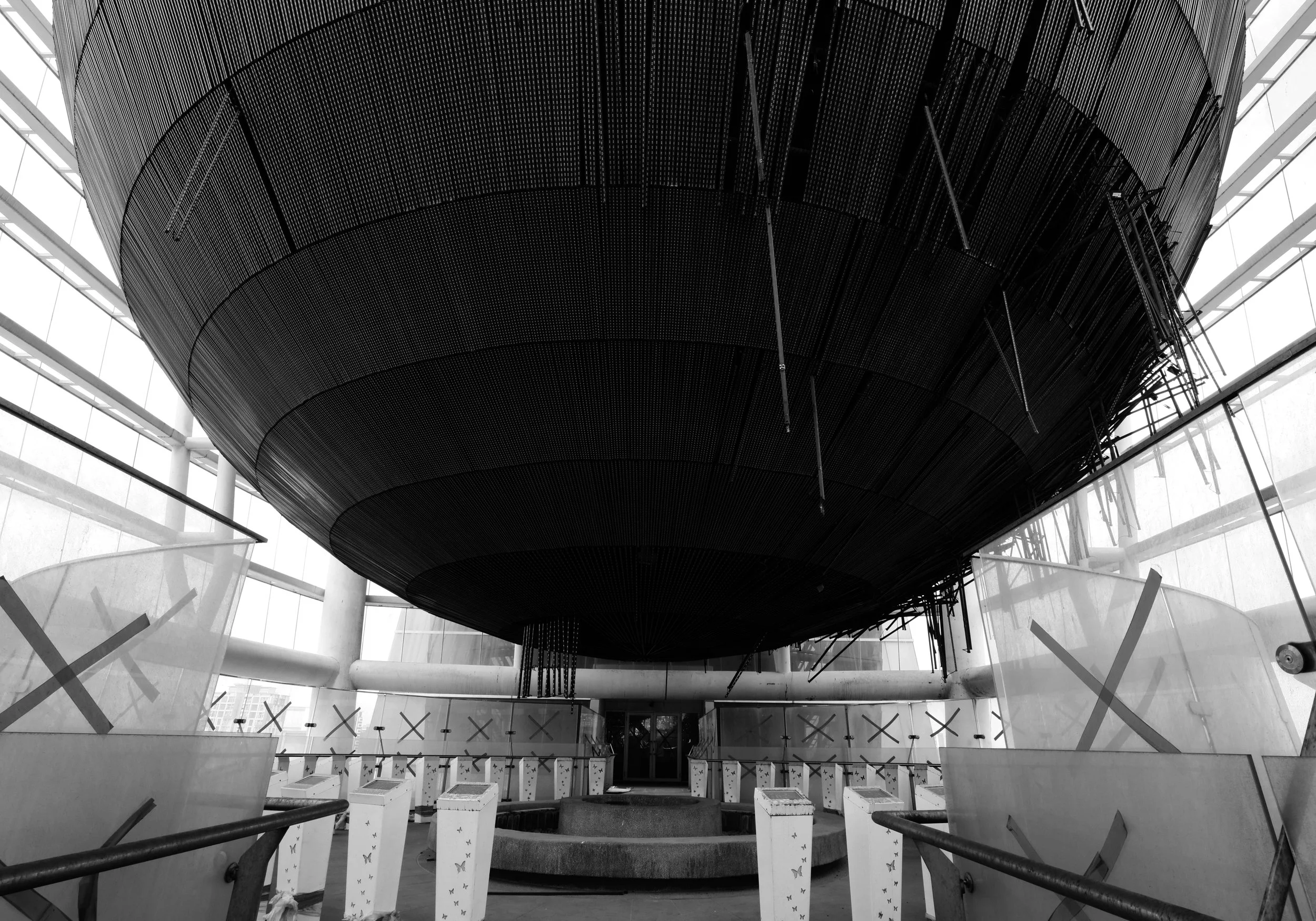
Yao Jui-Chung, Roaming around the Ruins,1990-2005, B&W Epson Digital Print Photos on black aluminum frame with acid-free paper. Image courtesy of the artist.
Through images of empty buildings, halted staircases, closed doors, and vacant plazas, Yao Jui-Chung’s work exposes the underside of what was once called “development”. Development for whom? Who bore its costs? And why do we keep building a future that remains unused, or a future that is already taking shape as ruin?
Yao Jui-Chung (b. 1969, Taipei, Taiwan; lives and works in Taipei) is a Taiwanese contemporary artist working across photography, performance, installation, and writing. He represented Taiwan at the Venice Biennale in 1997. His practice spans multiple media and is best known for long-term photographic projects documenting abandoned sites across Taiwan. Through these works, he critically engages with the absurdity of the human condition within Taiwan’s historical and socio-political landscape.
Warmly,
Jeongwon Seo
Curator at the Busan Museum of Art
Jeongwon is interested in examining how capitalism shapes perception through propaganda, drawing on her studies in Business and Art Mediation.
Author: Jeongwon
Translator: Hyunjung
Editor: Jiye
Image: Jeongwon via Yao Jui-Chung
