
[AVE Interview #3] Mary Lee — From Books to Encounters: How a Bookspace Became a Collaborative Space for Asian Diasporas
In May, AVE gathered in encounters bookspace in Berlin for our very first in-person poster drawing workshop. What struck us wasn't only the books on the shelves, but the feeling that this was a space where conversations could happen organically. That experience made us curious about the story behind the space and what it takes to keep it alive.
***
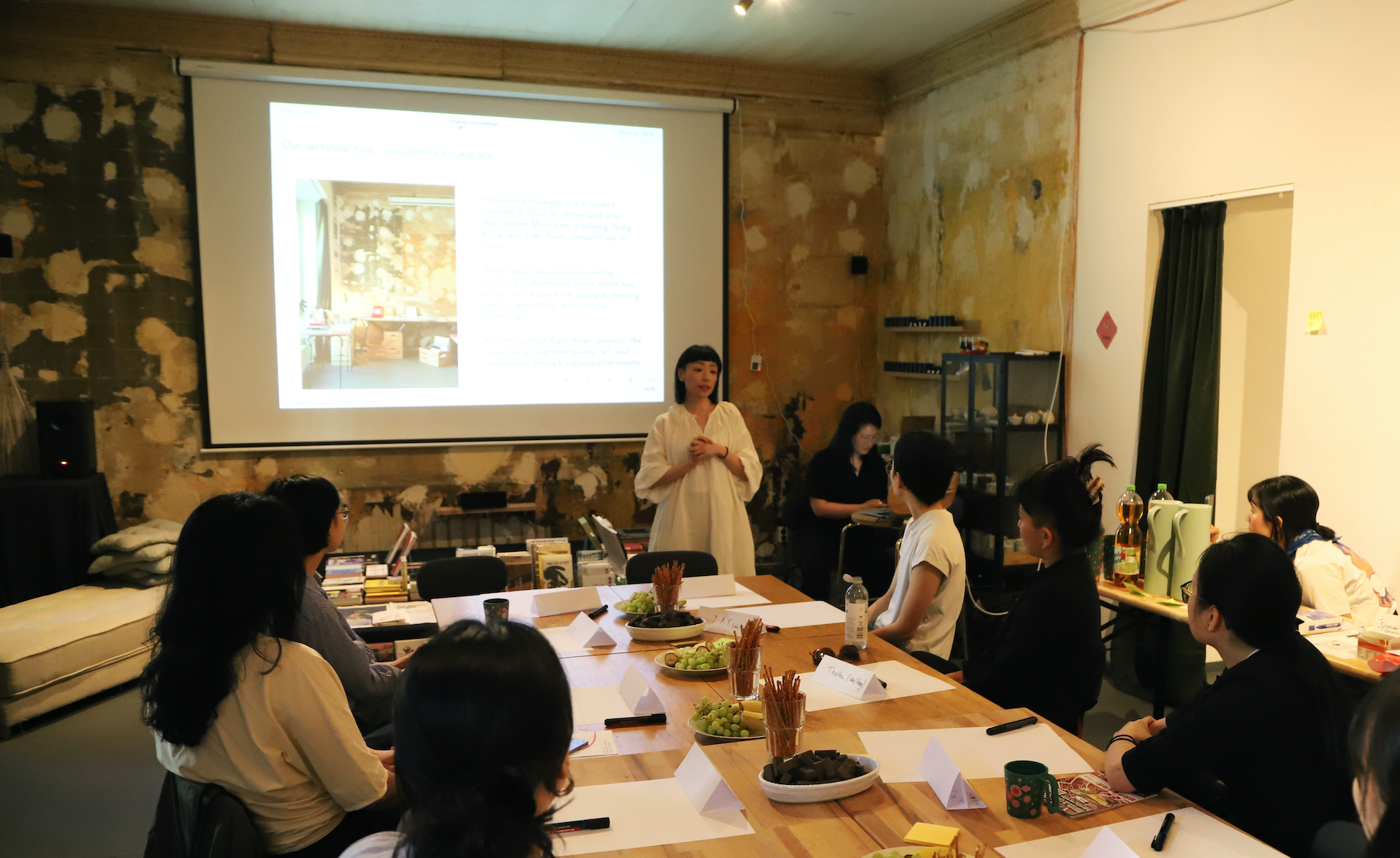
Mary introducing the bookspace during the AVE poster workshop; Photo credit by Miyeon Choi, Berlin 2026
***
AVE: Could you introduce yourself and tell us how encounters bookspace first began?
Mary: I am from Hong Kong, and moved to Berlin in 2019. Although “moved” sounds very intentional, it was actually not. I was travelling around Europe and taking some time away after spending many years working as an arts and cultural practitioner in Hong Kong with different organizations and independent art spaces.
Berlin was supposed to be one stop during that period. In 2019 several things happened almost at once, the backdrop of political upheaval in Hong Kong, followed by Brexit and pandemic. Returning to Hong Kong became increasingly complicated, both practically and emotionally. I had always considered myself an outsider who could leave whenever I wanted. Once staying became permanent, I had to ask myself: What am I doing here? During the pandemic, I had a lot of time to think. After the Umbrella Movement in 2014, people in the cultural sector already saw that political changes could have long-term consequences. After 2019, we expected that organizations would lose funding and projects would be suspended. The consequences did not all appear immediately, but they gradually became visible. At the same time, I was thinking about what it meant to remain connected to Hong Kong while living somewhere else. That was one of the beginnings of encounters.
A corner of encounters bookspace, photo credit by Mary Lee, 2026.
***
AVE: Was there a particular moment when you knew the project needed to exist?
Mary: The starting point was quite simple: I wanted to read books from Hong Kong. I realized that it was extremely difficult to find those books in Germany, especially publications from small independent presses. There was no bookshop at that time, where I could browse the kinds of Cantonese publications I was looking for. These were not just any books. Independent publishers had become important sites of cultural resistance: they documented local histories, experiences, and they created platforms for activists, journalists, and minority voices. I felt those perspectives were also needed in Europe. When I met people here, I would not know where to begin explaining Hong Kong, its history, or why it could feel uncomfortable when different identities are treated as monolithic or interchangeable. Even within so-called Sinophone communities, people speak different languages, have very different political and historical experiences.
“Books offered another way to begin. They could carry ideas, histories, and experiences across languages and borders.”
They could create a slower encounter with perspectives that might otherwise remain invisible. I began thinking about translation in a broader sense, not only translating words, but translating contexts and messages. The project was therefore both personal and political. It gave me a way to maintain a connection with Hong Kong while asking what Hong Kong meant to me from a distance.
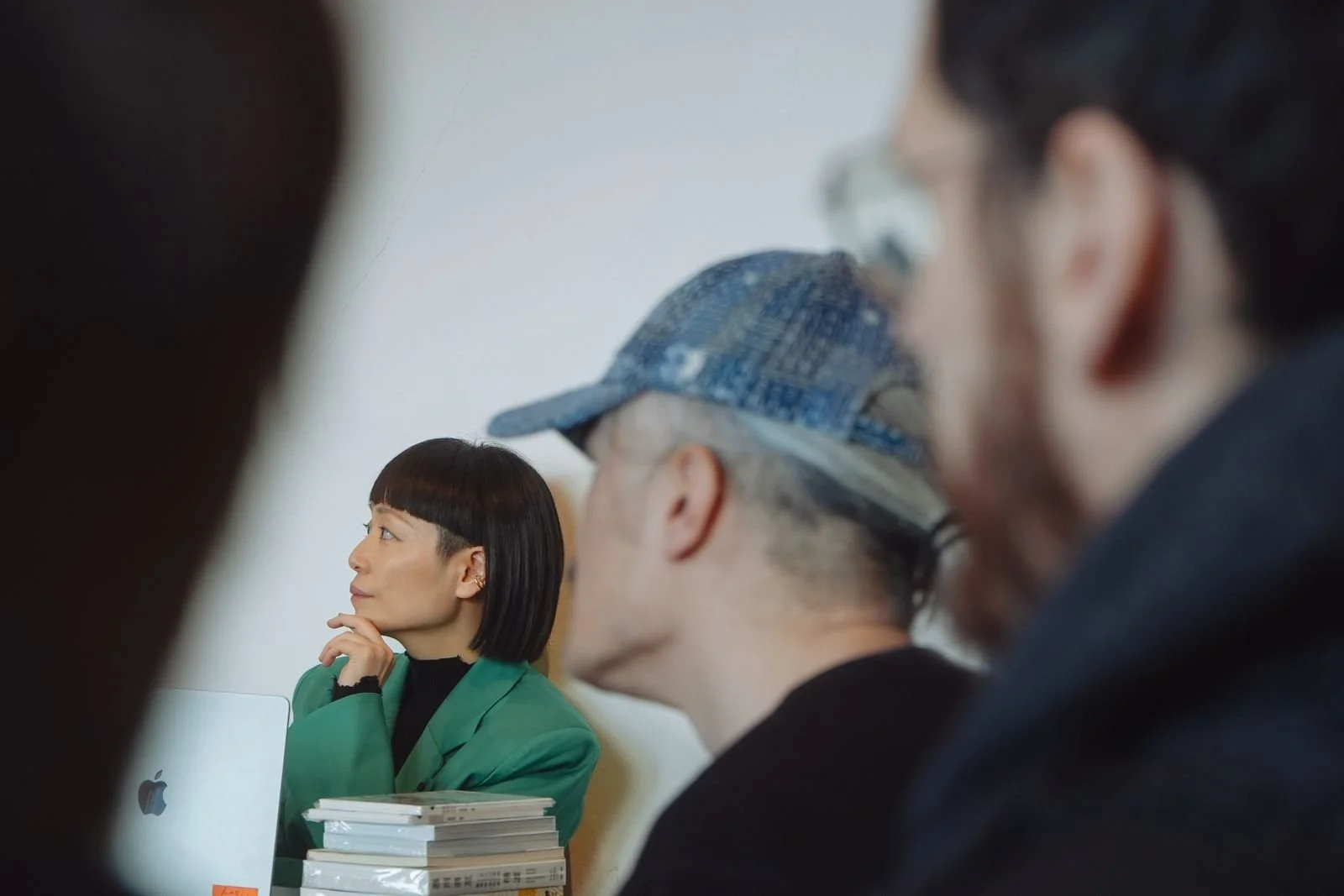
Book Talk: ”Encountering Hong Kong and Ireland in Time Difference” on March 29 2026, Featured: Mary Lee, Credit: Man Dik Sum (HupHub Berlin)
***
AVE: At what point did you feel that a permanent space was needed? ?
Mary: There was a literal reason: the number of books was growing after the temporary pop-ups and I needed somewhere to store them. In Berlin, cultural funding was being reduced, and many independent spaces were struggling or closing. As resources became more limited, I began to think that encounters should become more sustainable and perhaps also be able to give something back. Instead of always asking other spaces for support, could I create a space that other people also could use? I knew I could not run or pay for it alone, so it had to be shared.
Around that time, I reconnected with a Taiwanese cultural organizer from Impression Taiwan, an organization known for its Taiwanese film festival in Berlin. They were also thinking about creating a physical space where they could hold screenings and gatherings throughout the year. We felt our ideas could work together. We later found a third partner, Deerland Tea,a Taiwanese tea project in Germany. Books, film, and tea were very different practices, but each could bring different communities into the same place.
Eventually, we found our current location in Wedding. We reconfigured the space for talks, screenings, bookspaces, performances, exhibitions, workshops, and many others. We set it up very quickly, because we didn’t want to spend months designing the perfect interior and we had to pay rent every month.
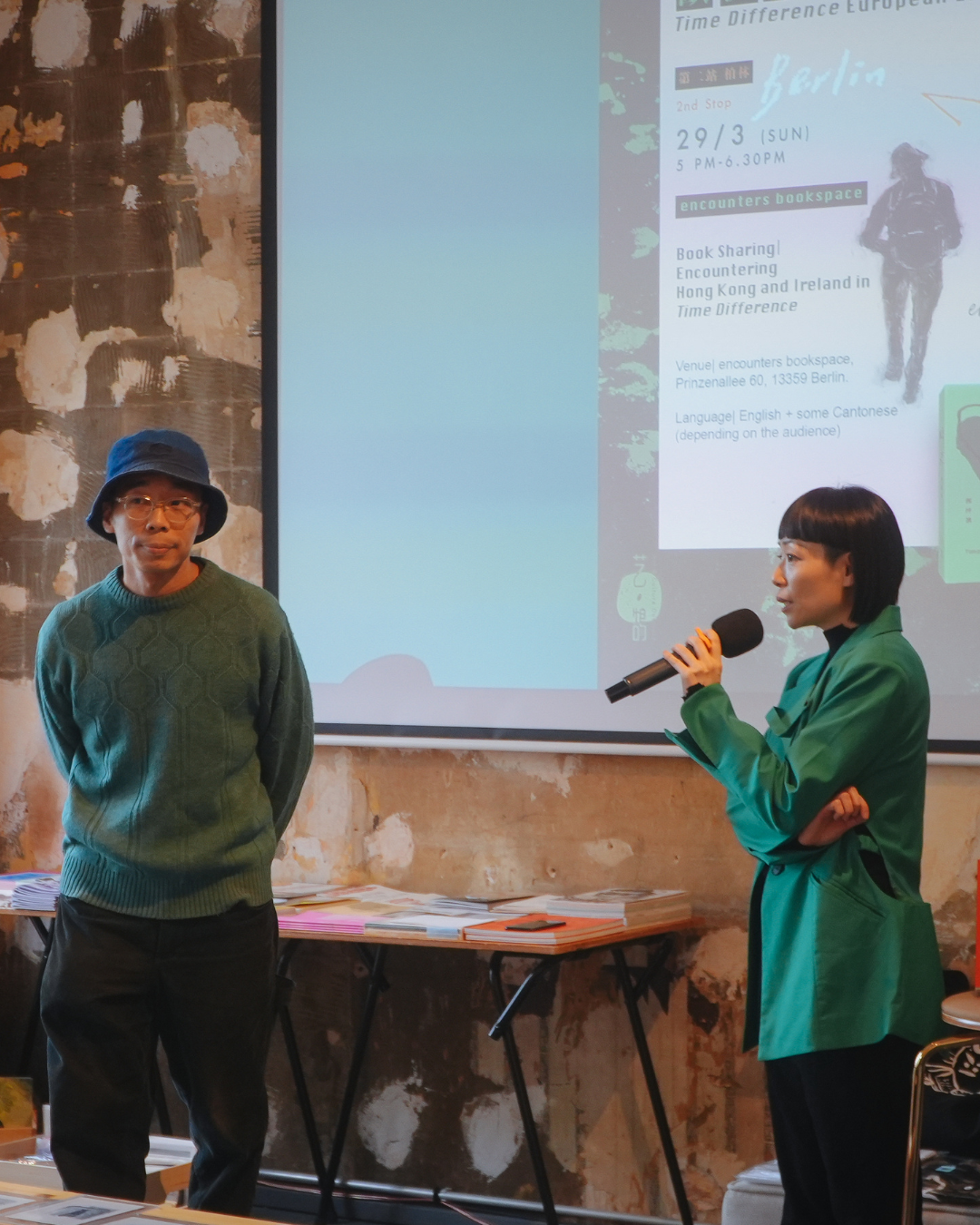
Book Talk “Encountering Hong Kong and Ireland in Time Difference” on March 29 2026; Featured: Ki Kwok and Mary Lee, Image Credit: Man Dik Sum (HupHub Berlin)
***
AVE: You have said that you believe in collaboration but not necessarily in collectivism. What is the distinction for you?
Mary: Collaboration is central to the project because I know that I cannot know or represent everything. Even when I say I am interested in the Asian diaspora, I know little to claim expertise over such a broad subject.
“The more honest and ethical approach is to work with other people who bring their own knowledge, concepts, methodologies, and experiences. Through collaboration, everyone can remain autonomous while working for a shared purpose.”
I am cautious about collectivism, because it can create the expectation that everything must be shared, but in practice people have different personalities, capabilities, expectations and working styles. Collaboration feels more practical, but also more honest.
***
AVE: What kind of challenges do you have while running the bookspace?
Mary: The financial situation is one challenge, but time and labor are equally important. I want encounters to remain independent because autonomy allows us to decide what we do, when we do it, and which collaborations make sense. Public funding can provide important support, but I don’t want the project to be shaped by what funders are willing to support. At the same time, complete independence is impossible. I decided early that rent could not be paid through book sales. It comes from sponsorships, shared contributions, and collaborations.
Our shared-space partnership is now changing, so we are looking for new partners or collaborators. The challenge is not simply finding someone who can pay part of the rent; we need someone whose practice can co-exist with the current project and who will contribute to the life of space actively.
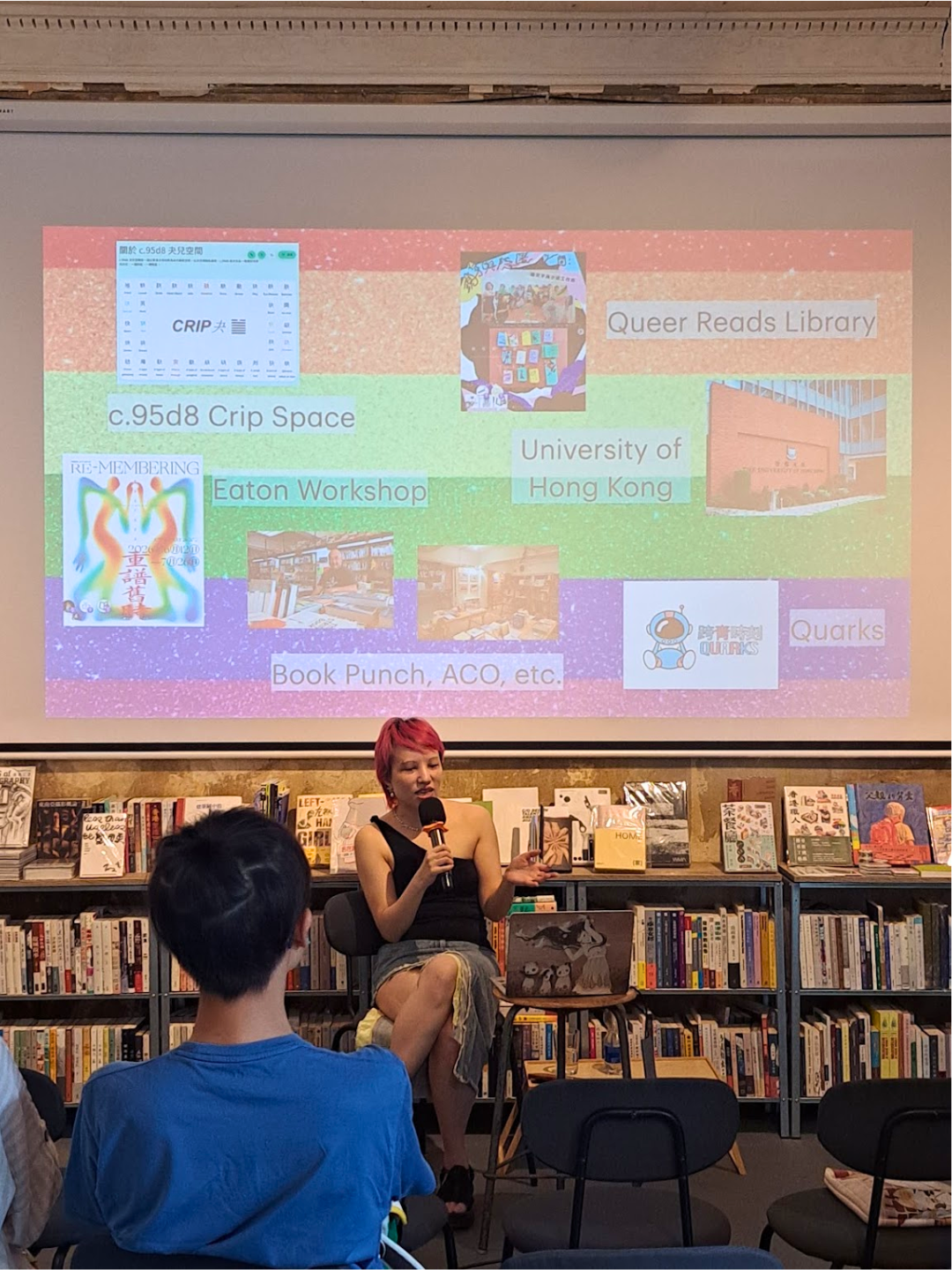
Talk on ‘Pride' and Asian Identities: A Queer Feminist Perspective on June 21, 2026, Featured: Grace En-Yi Ting, Image Credit: encounters
***
AVE: What kinds of partners/collaborators are you hoping to find?
Mary: Ideally, I would like to work with an Asian diasporic initiative that can bring new connections, knowledge, and methodologies into this space. encounters works with books, Impression Taiwanese works with film. A new collaborator could introduce another medium or practice. It might be an arts organization, a community initiative, a research group, or something we have not yet imagined.
We are also open to different models. Perhaps there is a recurring workshop series or a long-term program that does not require a full partnership but can still contribute regularly. The space should continue evolving through the people who use it.
***
AVE: What keeps you going despite uncertainties and challenges?
Mary: The project is doing what I hoped it would do. People are meeting through books and programs. They keep returning to the space, sharing their works, and introducing new people. Some visitors told me they had travelled to visit this bookspace as they hadn't found any similar places elsewhere
These days, bookshops are also closing due to the political and economic conditions. Here, financial pressure is connected to cultural funding cuts and the wider political environment. The disappearance of independent spaces means that we are losing places where conversations can happen.
“I hope this space stays run by and for Asian communities themselves, built on mutual aid and on looking out for each other.”
So it doesn't get swallowed up or misrepresented by white institutions..
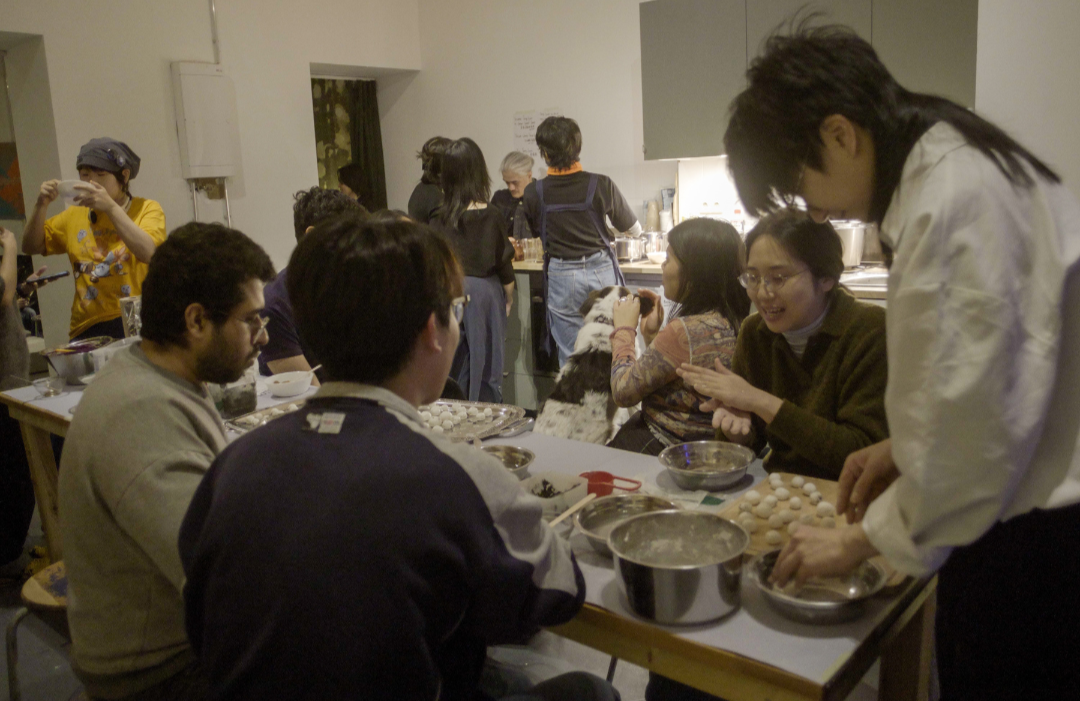
Event “Tong Jyun Roll Together” December 21. 2025, Image Credit: Mooni Perry
AVE: What does “encounters” mean to you?
Mary: encounter is actually a word I often come across while translating art writing, but I could not find a more accurate word for this project. encounters began with my personal experience as I was trying to understand what it meant to live here and how I could bring Hong Kong and Asian perspectives into conversation within this place. The project is about encountering perspectives through books, encountering people through collaboration, and creating a space where people can encounter one another. That is why we use plurals.
Last words for our readers from Mary:
“It is never one encounter, and it does not move in only one direction. The books travel from Asia to Europe, but the conversations also move back. Different communities meet, and generate something that did not exist before. I think that is the essence of the project: creating the conditions of many kinds of encounters and remaining open to what they might produce. ”
***
Do you have a project idea sitting in your notebook, waiting for the right space to grow? Are you looking to connect with Asian diaspora communities and build something together? This space is open to new partner(s) and collaboration. Anyone interested in joining as a co-partner of this space, or collaborating on a long term project, please get in touch at encounters.hongkong@gmail.com
***
Author: Hyunjung
Editor: Kennis
Photo credit: AVE, encounters, Man Dik Sum, Mooni Perry
