
Look back at the IMISCOE 2026 workshop “Racialised Positionalities in Research on Asian Diasporas”
From 29th June to 2nd July 2026, the 23rd IMISCOE Annual Conference took place in Girona, Spain, and online. IMISCOE, the International Migration Research Network, is the largest interdisciplinary network of migration researchers. This year, around 1000 international scholars attended the conference and were invited to reflect on “Strengthening Migration Studies through Community Engagement”. Discussions included the challenges, inequalities, dilemmas and strategies researchers encounter during the production of knowledge.
Migration and diaspora studies
In recent years, research on Asian migrations and diasporas has grown significantly, particularly given the intensified attention to these communities since the COVID-19 pandemic and amid the social, economic, and political challenges that followed [4,7]. These studies have not only become more central to social sciences, they are also increasingly conducted by scholars of Asian descent who have themselves experienced migration and racialisation [5].
Migration and diaspora studies have historically been shaped by power imbalances and white-dominated perspectives. And these perspectives have influenced how research questions are framed and how migrant communities are positioned as subjects rather than collaborators in the production of knowledge [1]. But while reflexivity regarding researchers’ positionalities has been, and remains, a central methodological concern in migration studies, the growing prominence of researchers of Asian descent has raised new questions regarding their specific situated, relational, spatial, emotional and negotiated over time [3,6].
*Positionality in qualitative research refers to “the fact that a researcher’s characteristics affect both substantive and practical aspects of the research process—from the nature of questions that are asked, through data collection, analysis and writing, to how findings are received” (Carling et al., 2014: 37).
What was the workshop about?
During the IMISCOE 2026 conference, I had the opportunity to co-organise a workshop with Xingcheng Wen (PhD candidate, University of Liège, Belgium) and Eric Florence (Associate Professor, University of Liège). The workshop was titled “Racialised Positionalities in Research on Asian Diasporas: Reflexivity, Methodology, and Collaboration”.
Our aim was to create a space for open exchange about researchers’ experiences and perspectives regarding how their racialised positionalities may influence their research design, the practical aspects of the fieldworkand the way in which they frame their findings.
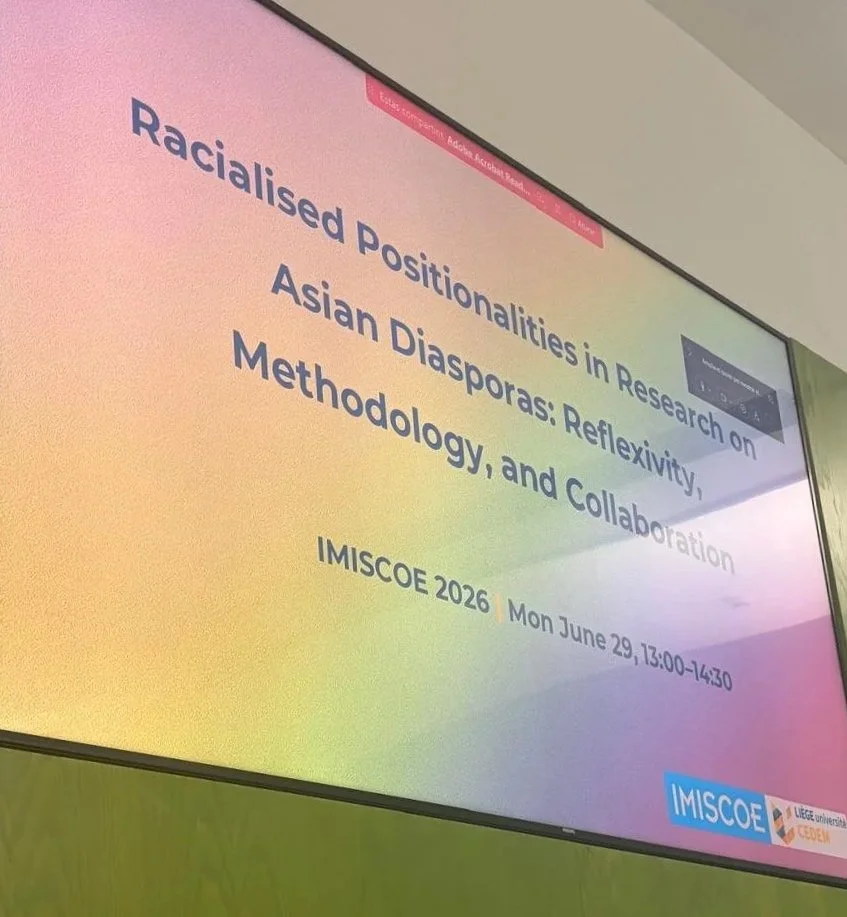
The opening slide for the workshop session at IMISCOE 2026, Image credit: Alison Diec.
During this session, five researchers from different backgrounds and at different stages of their academic careers shared their experiences of negotiating insider/outsider dynamics while engaging with co-ethnic populations: Wanjing Jiang (PhD candidate, KU Leuven, Belgium); Masako Nemoto (PhD candidate, University of Milano-Bicocca, Italy/University of Liège, Belgium); Xiuyuan Liu (PhD candidate, KU Leuven, Belgium); Juliette Duléry (Postdoctoral researcher, University of Liège, Belgium); Juan Du (Associate Professor, CY Cergy Paris University, France).
Take aways
Some takeaways for further reflection emerged from the speakers’ accounts and the discussion that followed:
Migratory and racialised backgrounds may be an incentive for researchers to study Asian communities, with the topic echoing their lived experiences. However, it is not necessarily the only reason. Research on Asian communities might also result from an intersection of personal experiences, intellectual interests, academic environment, and professional opportunities.
As the speakers emphasised, racialised positionalities are not fixed. Although shared characteristics may suggest insider status, the insider-outsider dynamics are continually redefined through encounters and interactions: researchers may feel or may be perceived as insider or outsider on a case-by-case basis.
Racialised positionalities may shape the practical aspects of fieldwork. Shared migratory and racialised backgrounds may facilitate connections with the participants and meaningfully collaboration with them. In some cases, however, other factors, such as institutional affiliation, may play a more prominent role in shaping possibilities of access and collaboration.
There is a caution about bias linked to their positionalities. When framing questions, one strategy is to avoid questions that are too specific or direct.
With some participants, maintaining ethical boundaries can help build trust. While maintaining an understanding attitude towards the participants, researchers may also maintain some distance, for instance by not giving them access to their social media.
Some researchers express the responsibilities they carry throughout the research process and their concern to take more care of their interlocutors. They feel an ethical responsibility towards them, especially when discussions touch on sensitive topics and negative experiences. Therefore, they are careful about how they end the meeting, so that participants do not feel further burdened by the experiences they have shared. One strategy is to leave some time at the end of the interview to let the participants express their emotions before returning home. Another strategy is to invite the participants to have a drink after the interview, to end the encounter on a more positive note.
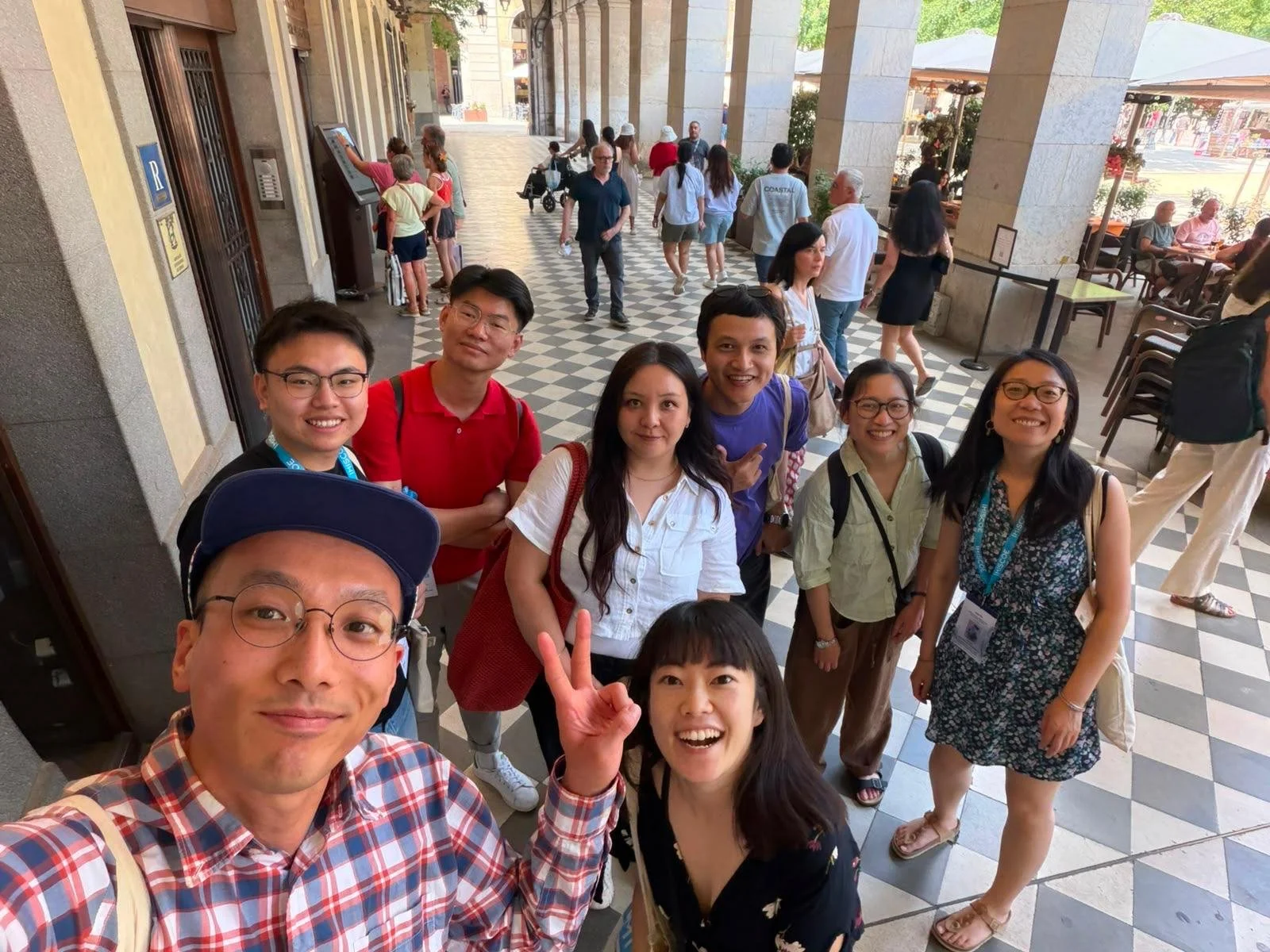
Caption: Workshop participants and members of the audience posing for a group photo during the IMISCOE 2026 conference, Image credit: Xiuyuan Liu
The aim of this workshop was, of course, not to set out a list of do’s and don'ts or provide definitive answers, but rather to share diverse personal experiences and think collectively about practices and strategies that enable meaningful collaboration and the co-construction of knowledge with the populations involved in research. This session only constituted a first exchange, and I have no doubt that the discussion will continue within, but also beyond, academia.
Author: Alison
Editor: Riya
Image: Alison Diec, Xiuyuan Liu
Alison Diec (she/her) is a PhD candidate in Political and Social Sciences (Cedem and PragmApolis, University of Liège, Belgium). She currently works on the (post-)migration experiences and identity dynamics of Chinese communities in Belgium. You can reach her at alison.diec@uliege.be.
