
Digestible Asianness: Violence in Food Culture
‘I hope they bring some satays for us’
On August 15, 2025, I was working in a museum next to Dam Square in Amsterdam. Before starting each shift, the team I was a part of always received the most important notices of the day during our morning briefing. During this particular briefing, our manager told us that there would be an event happening on Dam Square in the afternoon. Being half-Indonesian, I knew this event had to be the national commemoration for the end of WW2, in particular, the liberation of the former Dutch Indies. Luckily, for my colleagues who didn't know this, our manager explained. In response to hearing that it would be an Indonesian event, one of my colleagues – a Dutch man in his seventies – said: ‘Gosh, I hope they bring some satays for us'.
While it was probably intended as a lighthearted joke, it made me feel uneasy, but I did not quite understand why. It was only when I came home and retold this conversation to my partner that my confusion about the remark grew into frustration. I started wondering why the first thing anyone could think of in the context of a commemoration event – a moment in which people mourn the death and remember those who suffered during war – would be food. I also wondered if it would ever be possible for this particular thought to occur during the National Remembrance Day on the fourth of May, the nationwide moment when Dutch society mourns its wartime victims of WW2.
I was unable to answer these questions in a way that made sense to me. Yet I wished to uncover these hidden expectations of being Indonesian, or more broadly speaking, being Asian in Dutch society and how this related to food specifically. To do this and to understand this interaction that I had, I turned to the arts.
***
Reclaiming nr. 39
I found resonance in the artwork Forty nr. 39 (2014-2016) made by conceptual artist Benjamin Li, which I had seen in the Fenix museum in Rotterdam earlier in 2025. Li made his artwork in response to a racist remark made in 2013 by Dutch singer and presenter Gordon during a talent show. When a contestant with a Chinese background entered the stage to perform, Gordon asked the contestant – who was going to sing opera – if he was going to sing ‘number 39 with rice’. Li took this insulting remark as the start of his artistic project in which he visited over a thousand Chinese-Indonesian restaurants to photograph dish number 39 on the menu. He did this to honour both the dishes, as well as the people who made these dishes. With these photographs Li created several artworks, including Forty nr. 39.
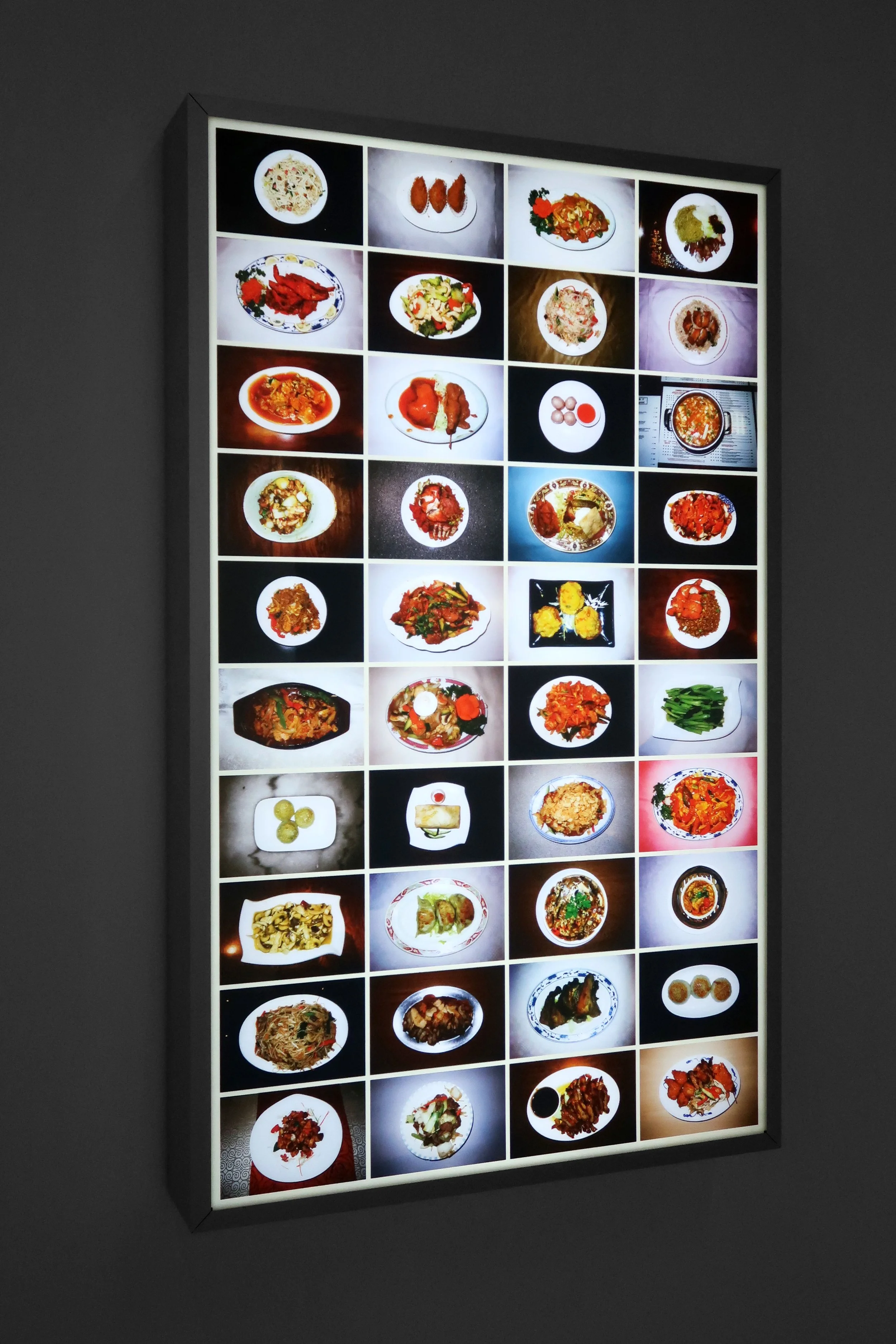
Fig. 1: Benjamin Li, A photo of Forty nr. 39, 2016, photographs on a lightbox, Fenix, Rotterdam. Image credit: Benjamin Li
In both the interaction that I had with my former colleague, and in the motivation for Li to make his artworks, it seemed to me that food was used in a way to reduce these people to one aspect from their culture and to diminish their complexity. To understand this better, I turned to the available literature about food and power. Scholars such as Roland Barthes and Mary Douglas have written about how food can express certain cultural beliefs and can say something about, for example, class or gender. This might sound a bit vague, but this idea becomes clearer when we consider that nowadays eating (a lot of) red meat is seen as masculine or that eating caviar is associated with a high social class .
We are who we eat with
Of course, food also plays a crucial role in forming our identity. By choosing what we eat or cook and who we do that with, we can express that we belong to a certain community. While that can usually be seen as something positive, we must also keep in mind that by creating a certain group, we also make a distinction between who belongs to ‘us’ and who does not: ‘the Other’ . Unsurprisingly, the creation of boundaries can have negative consequences for ‘the Other’, especially in multicultural societies in which some people of the dominant culture cannot seem to accept that migrants or people living in diaspora have their identity shaped by food that is different from the food of the country that they live in.
Bringing this back to Dutch society, we know that the dominant culture of this society is one where whiteness is the norm and racism exists in all layers of society (Wekker 2016). In such a society, there is a desire to maintain the status quo, which means that the Other, in one way or another, needs to be exploited. This exploitation in our capitalist society can be done through commodification and using the Other for ‘resources of pleasure’ . In our context, this ‘resource of pleasure’ is Asian cuisine.
I interpreted Li's Forty nr. 39. as a reflection of (a) how Asian people in the Netherlands are often seen as a homogeneous group and that (b) this ‘Oriental Other’ is expected to provide a service for Dutch society and its people.
The homogenisation, (a), can be seen in Forty nr. 39 quite literally, with all the dishes being labeled as ‘nr. 39’, even though they are all different.. This idea of sameness is further enhanced by the fact that all the dishes are photographed with the same composition and are presented as symmetrical boxes on a larger box. The expected service of the ‘Oriental Other’ for Dutch society, (b) is illustrated by the fact that the artwork only displays images of the dishes, not the people who created them. Their presentation on a lightbox adds to this, as a reference to the lightbox menus that can be found in food courts throughout Asia. I would argue that this brings forward the idea that the Westerner cares more about what Asian people can offer (in this case delicious food) than about the actual people who make it.
Doing food violence
The idea that Asian people are of service through their cuisine is not new. This way of approaching the artwork is in line with what philosopher Lisa Heldke calls the ‘food adventurer’, someone who desires to have contact with the Other to make themselves more interesting. The food adventurer removes the ‘‘ethnic food’’ from its original context and claims it as something that can give them cultural prestige (Hirose and Pih 2011, 1484). I would say that this act of removing and appropriating cultural food is a form of symbolic violence, which is a way of ‘doing violence’ that is not physical, but still can be considered as imposing control over the Other (Jenkins 1992, 66).
Ultimately, thinking back about the interaction that I had and relating that to the analysis of Forty nr. 39, it seemed to me that when someone with an Asian background tries to take up space in Dutch society – whether this is to publicly mourn or to show off a talent – the response would be repressive and related to food; a context in which a service is expected for the white mainstream. I see this response as an attempt to frame the person with an Asian background in a way that is deemed more acceptable or digestible for the dominant culture. I call this set of expectations of how the Other ‘should be Asian’ in order for the Westerner to accept them into ‘their’ society: Digestible Asianness.
Food, while being a wonderful way through which we can connect to our heritage, can also be weaponised against the community it serves. This weaponising can happen in subtle ways, such as expressing a desire to be served food during a commemoration event (that you're not even involved in), but it can of course also happen more openly with snarky remarks about how ‘stinky’ or ‘disgusting’ our cultural food is.
A seat at the (dining) table
A seat at the (dining) table
However, I do not wish to end this on a cynical note: sharing our heritage and cuisine can be enjoyed and appreciated by the dominant culture without people seeking to gain something from this. Our kitchens and dinner tables, both at home and in restaurants, are powerful sites where we can create a connection with others. So while food can be used to exclude, our dinner tables don't have to be.
After all, it’s not just our food that is a cornerstone of our cultural identities, it’s also about the act of eating it together with others in a moment of bonding, care and shared joy. In a society in which our food has been demonised and used to divide people, we can use our dinner tables to bridge the gap or at least make it a little smaller. We have seen the power of sharing dinner tables in Antwerp in 2024, for example. When celebrations of both Ramadan and Easter took place around the same time, resulting in the setting up of a two kilometer long dinner table where all people, whether they were Muslims, Christians or non-religious, were welcome. Or last April, when residents of Amsterdam Noord, who all had different cultural backgrounds and had never met, were paired up to cook and dine together during a community project. The neighbours not only shared the activity of preparing dinner together, but they also had a moment to share their stories about where they came from (as many of the participants were refugees) and what food meant to them. This show us that the dinner table can actually be a powerful place of connection, a place where the simple act of sitting and eating together might just make us realise that the people we're sitting next to are not so different from us in the end.
Editor’s Note: Events like Trans Diner, where transgender people dine at the heart of Amsterdam (running for the third time this year), or The Longest Table, where 1,000+ people gather to break bread and share stories (run by The Refugee Company), are examples of tables bringing people together.
Author: Gabriëlle
Editor: Jiye
Image credits: Benjamin Li
Gabriëlle Scheijbeler (she/they) is an art historian based in The Netherlands. They currently work as a Provenance Researcher specializing in the Indonesian colonial collection at a Dutch museum. You can reach them on LinkedIn and at Gabriellescheijbeler [at] gmail [dot] com.
